
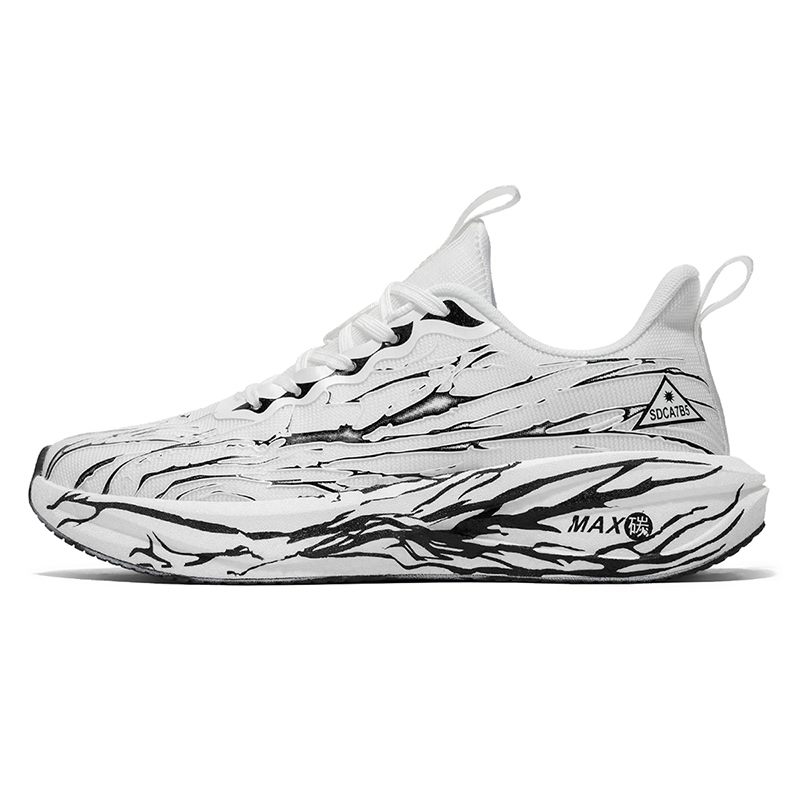
The defining feature: stack height
Stack height is the thickness of material between the foot and the ground, usually measured at the heel and the forefoot. Traditional running shoes sit lower; thick-sole or max-cushion shoes use a visibly taller midsole. There is no single official threshold — the term is relative to ordinary trainers.
Drop is a separate measurement
Heel-to-toe drop is the difference between heel and forefoot stack height. A thick sole can have a high or a low drop. Two shoes that look equally tall from the side can feel very different because of drop, so ask for both numbers.
Rocker geometry
A tall block of foam does not bend easily, so most thick-sole shoes use a rocker: the sole curves up at the toe, and sometimes at the heel, so the foot rolls forward instead of flexing sharply. The position of the rocker point changes how the shoe feels at walking and running speeds.
Stability by shape
Height reduces stability, so designers widen the base, flare the sole outwards and let the foot sit slightly down inside the midsole sidewalls. When reviewing a sample, look at the shoe from behind and from below as well as from the side.
A note on competition rules
For official road races, World Athletics shoe regulations limit sole thickness (40 mm for road events at the time of writing). The rule applies to competition, not to everyday training or lifestyle footwear, but it explains why many performance models sit just under that figure.
Who buys thick-sole running shoes
- Everyday runners who want soft landings on long, easy runs.
- Walkers and people on their feet all day, for comfort.
- Sport-lifestyle customers, who choose the chunky silhouette for its look.
That mix of performance and fashion demand is why the category works for sports retailers, fashion chains and online sellers alike.
What importers should check
- Weight per shoe in the sample size — tall soles can become heavy.
- Foam type and density (see our midsole materials guide).
- Outsole rubber coverage in the wear zones.
- Stability on a flat surface and under side-to-side pressure.
- Upper-to-sole alignment, which is easy to see on large soles.
For a full review method, use the thick-sole development checklist.
See 40 thick-sole styles ready for your brand.
From value mesh trainers to visible-air and rocker-sole runners, each style lists reference price and size range.
Ask about a model Get the PDF catalog (40 styles)