
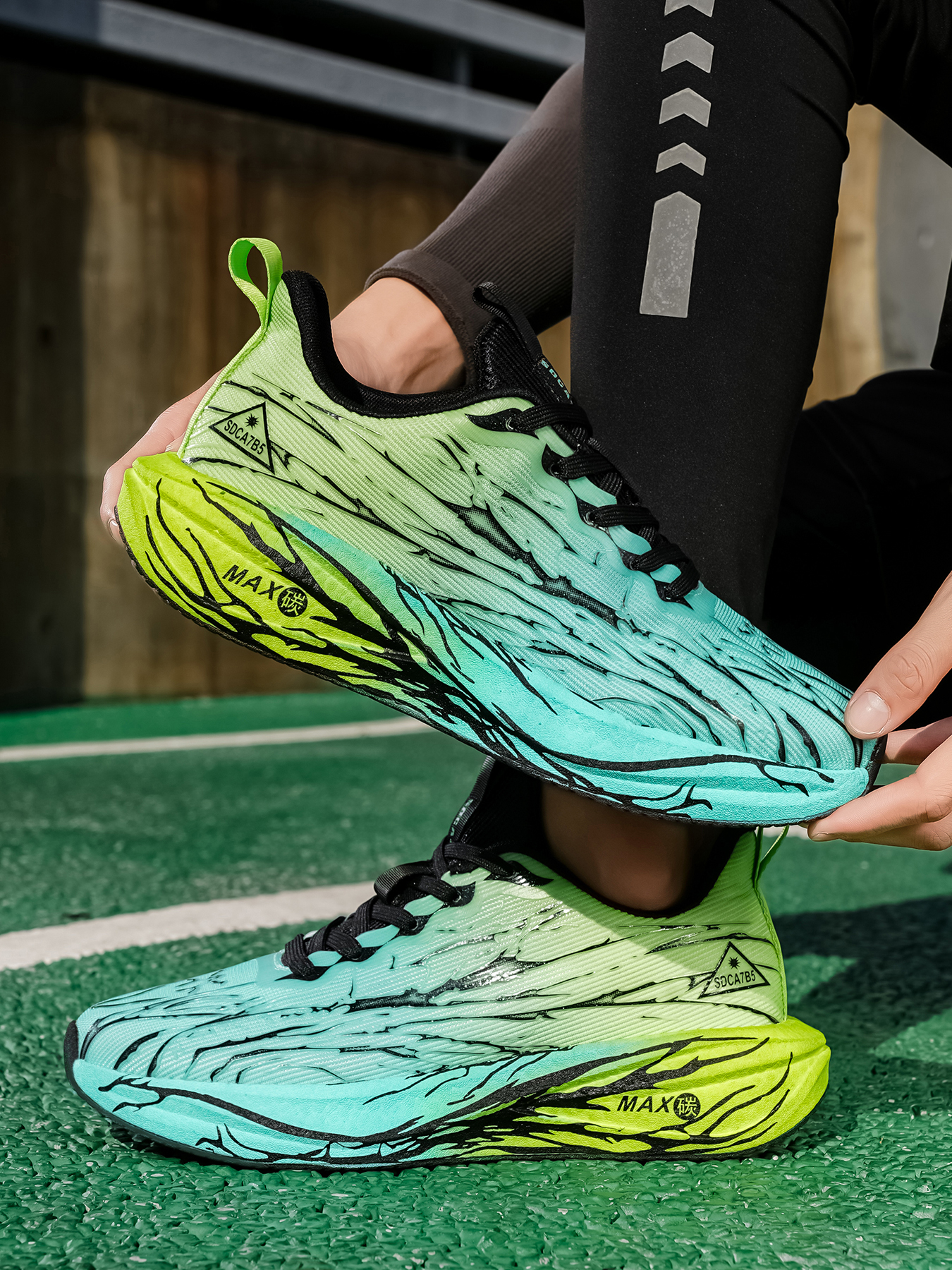
Start with the silhouette
Check the shoe from the lateral side, medial side, top, heel and outsole. A sole can look balanced in one photograph but too long, too high or too narrow from another angle. Confirm toe spring, heel extension and the relationship between upper volume and sole volume.
Review the fit platform
A dramatic sole does not replace a clear fit target. Confirm sample size, internal length, forefoot allowance, heel hold and collar pressure. Note whether the shoe is intended for running, walking or fashion use because the acceptable feel and structure will differ.
Check flex and transition
Observe where the shoe bends and how the forefoot rolls forward. Excess stiffness in the wrong zone can make the product feel awkward even when the visual direction is strong. Discuss flex expectations before tooling and material choices become difficult to change.
Inspect ground contact
Look at the outsole contact shape on a flat surface. Check stability at the heel and forefoot, the width of the base and the continuity of rubber coverage. Deep cut-outs and visual air elements should be evaluated together with the intended use and wear conditions.
Confirm upper-to-sole alignment
Make sure the upper sits correctly on the bottom unit. Review toe centering, heel position, lasting line and adhesive visibility. Large sole forms make small alignment errors easier to notice.
Approve colors under more than one light
Bright gradients and contrast pieces can shift under warm retail light, daylight and photography. Compare physical material swatches with the finished sample. Record approved color references and identify which component each reference controls.
Lock branding and packaging together
Confirm logo size, orientation and production method on the upper, tongue, sockliner and outsole. Then verify product name, size labels, carton marks and packaging artwork use the same approved identity.
Bring your checklist to the next sample review.
XiangChi supports thick-sole running shoe development from product direction through sampling and production preparation.
Discuss a thick-sole project